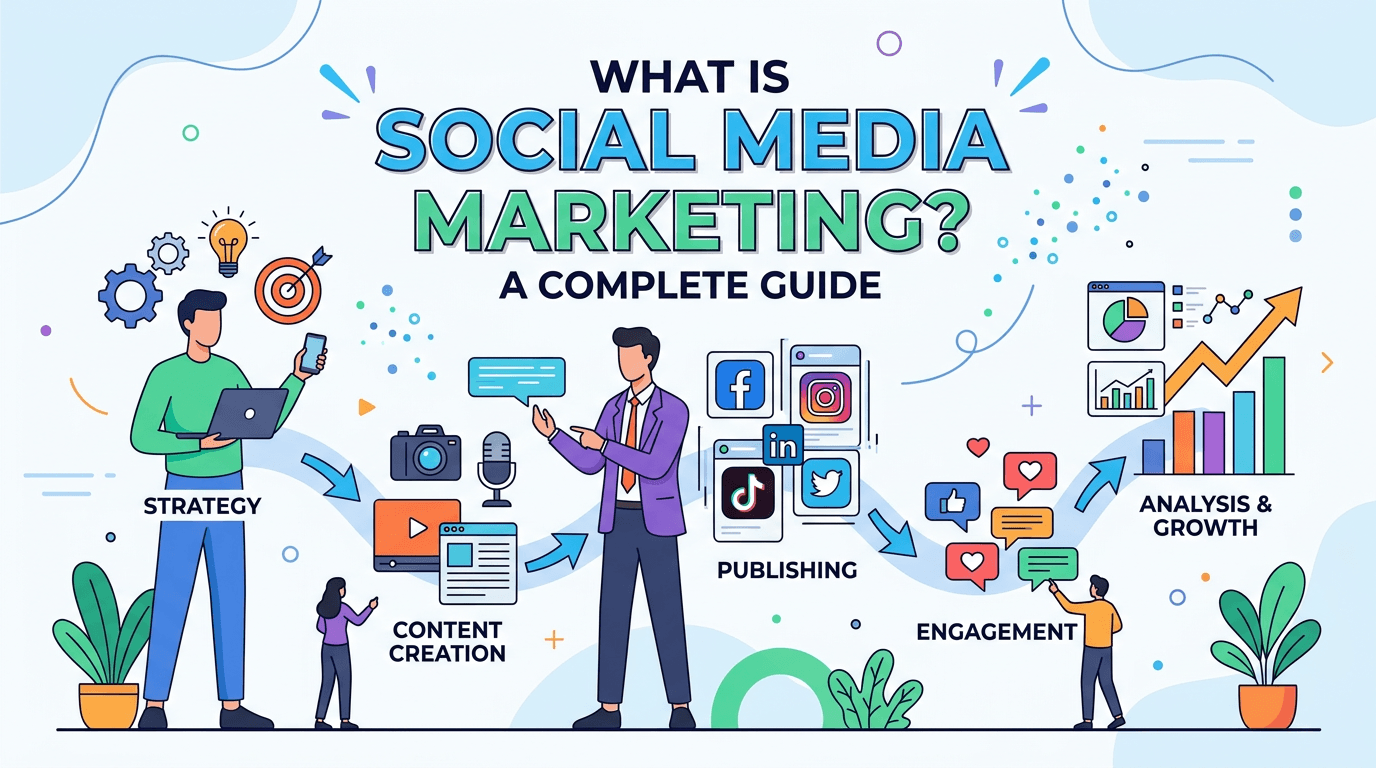
Social Media Marketing = Using platforms like Facebook, Instagram, and LinkedIn to promote products or services. The core goal is to attract → engage → convert → retain customers. It works for both B2B and B2C businesses and remains entry-level friendly with a low startup cost. You can start today with just a smartphone and an internet connection.
Introduction to Social Media Marketing
Social Media Marketing (SMM) is the practice of creating and sharing content on social networks to achieve marketing and branding goals. That content can be text, images, videos, stories, live streams, or interactive polls. The goals can include increasing brand awareness, generating leads, driving website traffic, or boosting sales.
Why Social Media Marketing Matters in 2026
As of early 2026, there are over 5.2 billion active social media users worldwide — roughly 64% of the global population. Your customers are already there. They are scrolling, liking, sharing, and commenting every single day.
How Social Media Compares to Traditional Channels
Traditional advertising is losing effectiveness. People skip TV ads, ignore billboards, and throw away junk mail. Social media? They willingly spend hours each day consuming content. Here is a direct comparison.
| Channel | Avg. Daily Time (US Adults) | Ad Blocking | Targeting Precision |
|---|---|---|---|
| TV | 2 hr 45 min | Yes (skip DVR) | Low |
| Radio | 1 hr 15 min | Yes (change station) | Very Low |
| 15 min | Yes (skip section) | None | |
| Social Media | 2 hr 30 min | Difficult (platform-controlled) | High to Very High |
Evolution of Social Media in Digital Marketing
The field has changed dramatically. In the early 2010s, brands simply posted links. Around 2018, algorithms began prioritizing content that sparked conversation. Then came short-form video — Reels, Shorts, TikTok. By 2020, video dominated. Today in 2026, AI tools and social commerce are reshaping everything.
How Social Media Marketing Works
Social Media Marketing follows a clear process: Content → Reach → Engagement → Click → Conversion. Think of it like planting a garden. Your content is the seed. Engagement is the water and sunlight. Conversions are the fruit you harvest.
The Conversion Funnel in Practice
Top of Funnel — Awareness
Educational or entertaining content that does not ask for anything. How-to videos, industry memes, inspiring quotes. People see it. Some follow you.
Middle of Funnel — Consideration
Content that builds trust. Customer testimonials, behind-the-scenes, product comparisons. People start to see you as a credible option.
Bottom of Funnel — Conversion
Content that asks for action. Discount codes, product page links, webinar invitations. People who have seen earlier content are ready to buy.
Organic vs Paid Traffic
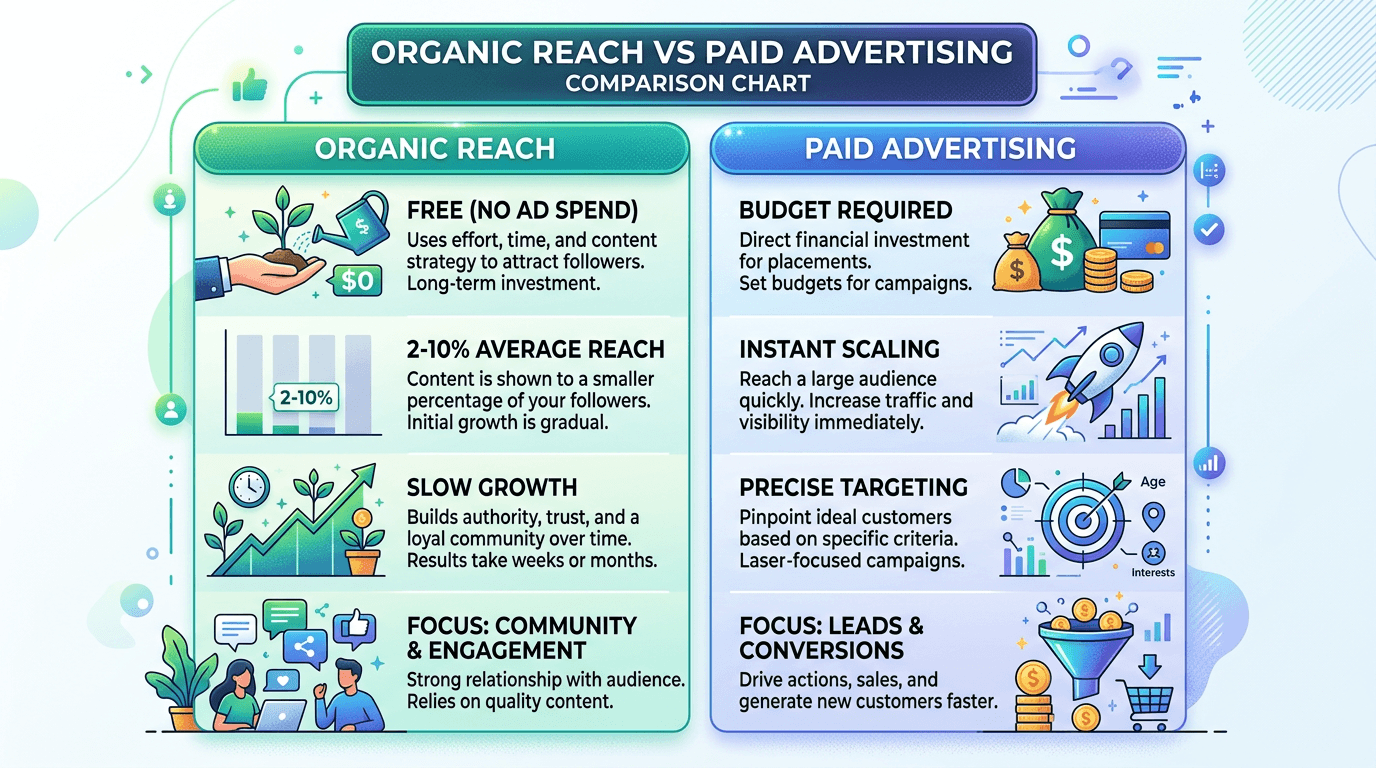
This is one of the most important distinctions. Organic reach means you post content for free — but only 2–10% of your followers will see any given post. Paid advertising lets you target any audience instantly, with results within hours.
| Feature | Organic Reach | Paid Advertising |
|---|---|---|
| Cost | Free | Budget required (as low as $5/day) |
| Reach | Limited (2–10% of followers) | Predictable, scalable |
| Targeting | Only your existing followers | Any demographic or interest group |
| Speed | Slow — months to build | Instant results within hours |
| Long-term value | High — content can perform for years | Low — stops when budget stops |
| Best for | Building community and trust | Driving immediate sales or leads |
Retargeting increases conversion by 2x–5x. Showing ads to people who have already visited your website or engaged with your content generates 2 to 5 times higher conversion rates than cold audiences, because they are already warm to your brand.
How Algorithms Work
Algorithms decide which posts people see. To beat them, create content people want to save, share, and watch all the way through. Here is what all major platforms prioritize:
- Recency: Newer posts get preference over older posts
- Relationships: Content from accounts you interact with frequently shows up higher
- Content type: Video, especially short-form, gets more reach than images or text
- Completion rate: For video, the percentage who watch to the end matters greatly
- Saves and shares: These signal high value more than likes or comments
Key Social Media Platforms Explained
Not all platforms are the same. Trying to be everywhere at once is a common mistake. Choose the platforms where your audience spends their time.
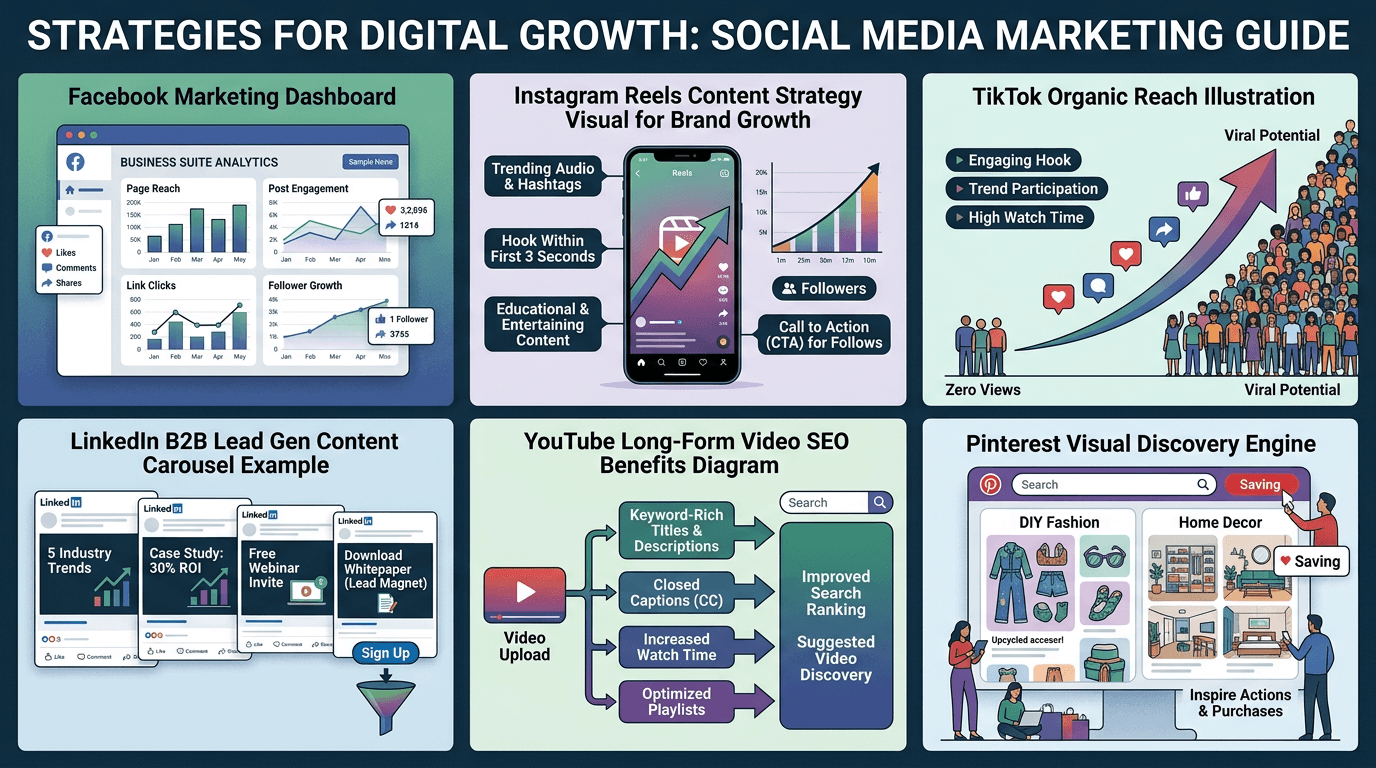
Best for local businesses and ads targeting. Skews older (fastest growth: 55+). Advanced targeting via Meta Ads Manager. Excellent for community groups, traffic to articles, and local business advertising.
Best for visual brands, influencers, and e-commerce. Ages 18–34 dominate. Reels get the highest reach. Excellent for fashion, food, travel, beauty, and lifestyle brands.
Best for B2B, professionals, and lead generation. Working professionals aged 25–55. Document carousels and text posts drive strong engagement. Excellent for consulting, recruiting, and thought leadership.
TikTok
Highest organic reach for short-form video. Majority under 30, expanding rapidly. Unique algorithm rewards content quality over follower count — zero-follower accounts can go viral.
YouTube
Long-form video plus SEO benefits. Spans all ages, strongest 18–49. Rewards watch time and session duration. Excellent for tutorials, product reviews, and education.
Best for DIY, recipes, fashion, and home decor. Predominantly female, ages 25–54. High purchase intent. Content has a long shelf life compared to other platforms.
| Platform | Primary Intent | Best For |
|---|---|---|
| Connect with friends, join groups | Community, local businesses, older audiences | |
| Visual inspiration, lifestyle aspiration | E-commerce, fashion, travel, food, beauty | |
| Professional networking, career development | B2B services, consulting, thought leadership | |
| TikTok | Entertainment, discovery, trends | Reaching Gen Z and younger Millennials |
| YouTube | Deep dives, tutorials, entertainment | How-to videos, product reviews, vlogs |
| Planning and discovery | Lifestyle, home decor, food, fashion |
Types of Social Media Marketing
Social Media Marketing is not one single activity. Most businesses use a mix of these types depending on their goals and budget.
Content Marketing
The foundation of everything else. You create valuable, relevant content that your audience actually wants to consume — education, entertainment, or inspiration. A fitness coach posts free workout videos. A real estate agent posts neighbourhood guides. A software company posts product tips. All of this is Content Marketing, and it builds trust without directly selling.
Influencer Marketing
Partnering with people who already have a loyal following. Effectiveness comes from trust — people trust recommendations from people they follow far more than brand advertisements. Micro influencers (10,000–100,000 followers) often deliver the best ROI because they have higher engagement rates and are seen as relatable peers.
Paid Social Ads
You pay the platform to show your content to specific people. You can target by location, age, gender, interests, behaviors, job titles, and even previous website visitors. Cost varies by platform: Facebook and Instagram ads typically cost $0.50–$2.00 per click. LinkedIn ads cost $5–$10 per click but reach a more valuable B2B audience.
Affiliate Marketing
Turn your customers and fans into salespeople. Each person gets a unique discount code or tracking link. When someone purchases using that link, the affiliate earns a commission. This encourages organic sharing of your products across social media.
Video Marketing
Video is the most engaging content type on every platform. Short-form video (Reels, Shorts, TikTok) gets the highest reach and engagement. Long-form content on YouTube builds deeper trust. Short-form video is the single highest-leverage content investment in 2026.
Benefits of Social Media Marketing
Brand Awareness
Every share, like, and comment exposes your brand to the friends and followers of the person who engaged. A single post that gets 500 shares might reach 50,000 new people. This ripple effect can grow your market reach exponentially.
Lead Generation
Social media is excellent for lead generation because you can offer valuable free content in exchange for an email address. The cost per lead on social media is typically 50% to 70% lower than traditional outbound methods like cold calling or direct mail.
Website Traffic
As confirmed by Google Analytics traffic reports, social media can be a significant source of website visits. A common strategy is posting a video teaser on social and saying "Link in bio for the full guide" — driving users to your site for the complete resource.
Customer Engagement
Social media allows two-way conversations. When you answer customer questions publicly, you show potential customers that you are responsive and helpful. When you resolve complaints publicly, you turn a negative experience into a positive one that everyone sees.
Step-by-Step Social Media Marketing Strategy
Step 1: Set SMART Goals
A bad goal is "get more followers." A SMART Goal is "increase Instagram followers by 20% in the next 3 months by posting three Reels per week and engaging with 10 new accounts daily." Examples of strong social media SMART Goals:
- Increase website traffic from Facebook by 30% within six months
- Generate 50 new email signups from LinkedIn content in one quarter
- Achieve an average engagement rate of 4% on Instagram Reels over two months
- Drive 100 product sales from TikTok ads with a 3x return on ad spend
Step 2: Define Your Target Audience (Buyer Persona)
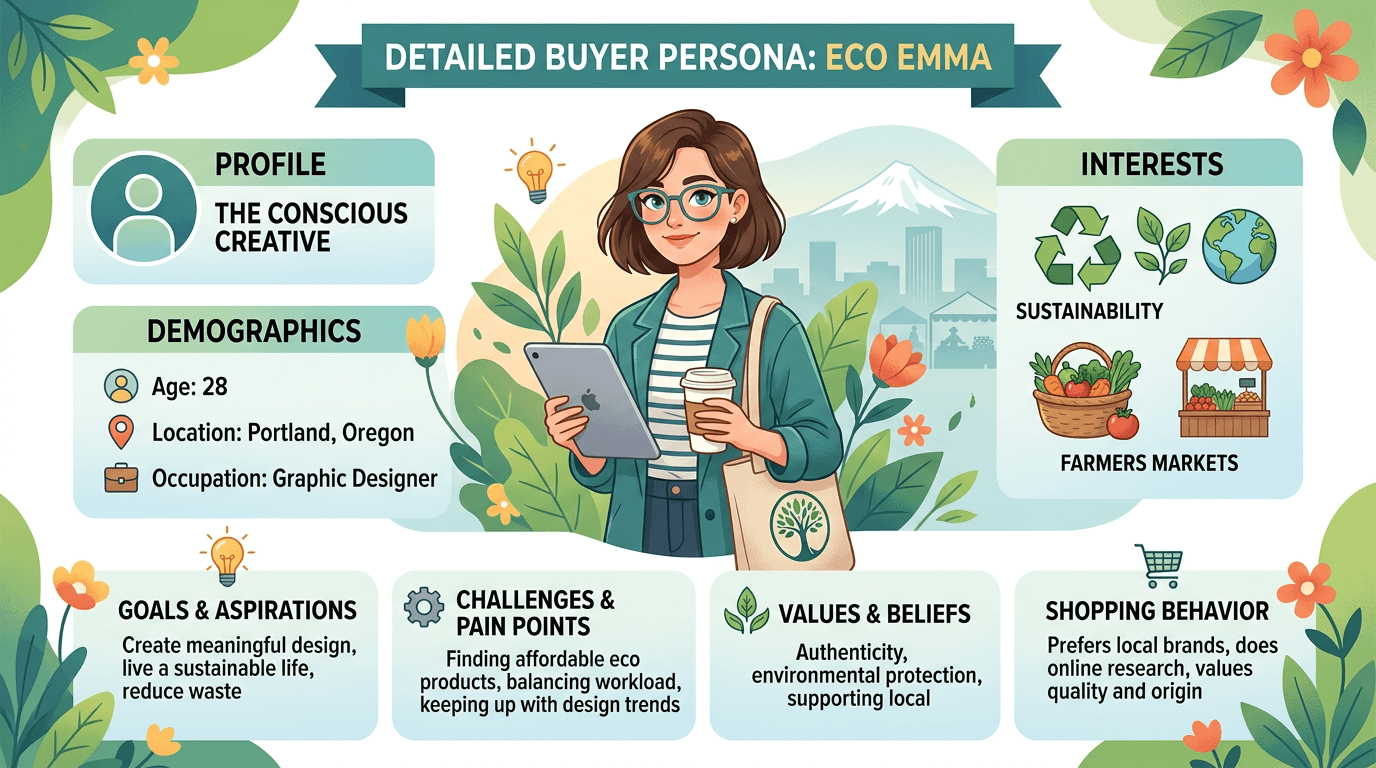
Give your ideal customer a name, age, job, income level, challenges, and goals. For example: "Eco Emma, age 28, lives in Portland, works as a graphic designer, earns $65,000, shops at farmers markets, follows environmental activists on Instagram, and uses Instagram and TikTok daily." Every piece of content you create should answer the question: "Would Eco Emma find this valuable?"
Step 3: Choose the Right Platforms
Do not try to be everywhere. Pick one or two platforms to start, master them, then expand. A B2B software company should focus on LinkedIn. A local restaurant should focus on Instagram and Facebook. A youth-focused fashion brand should focus on TikTok and Instagram.
Step 4: Build a Content Calendar
A Content Calendar is a schedule of what you will post and when. Each entry should include the date, time, platform, content type, caption, and any links or images. Planning prevents last-minute scrambling and ensures a consistent mix of educational, entertaining, promotional, and conversational content.
| Day | Content Type | Topic | Platform | Time |
|---|---|---|---|---|
| Monday | Educational | "3 tips for [topic]" | Instagram Reel | 9 AM |
| Tuesday | Entertaining | Behind the scenes | Instagram Story | 12 PM |
| Wednesday | Educational | Carousel comparison | Instagram Feed | 10 AM |
| Thursday | Engaging | Poll or question | Instagram Story | 3 PM |
| Friday | Promotional | Product spotlight | Instagram Feed | 11 AM |
| Saturday | Entertaining | Customer feature / UGC | Instagram Reel | 10 AM |
| Sunday | Rest | No post | — | — |
Step 5: Engagement Strategy
Posting is only half the work. Set aside 15–30 minutes each day to respond to comments, reply to messages, comment on other accounts in your niche, and share relevant content. Replying within 24 hours is the minimum standard. Within 1–2 hours is better.
Step 6: Track Performance Weekly
Set a recurring 30-minute appointment every Monday morning. Review the previous week's analytics. What posts had the highest engagement? What time drove the most reach? What content type drove the most clicks? Use this data to plan the following week.
Content Strategy for Social Media
The Right Content Mix
A healthy content mix includes three types. 40% Educational — teaches something useful. 30% Entertaining — makes people laugh or feel good. 30% Promotional — asks for a sale or signup. If you promote more than 30% of the time, people will unfollow or mute you.
Short-Form Video Gets the Highest Reach
Reels, Shorts, and TikTok videos (15–90 seconds) get the highest organic reach on every major platform. Platforms prioritize video because it keeps people on the app longer. If you are not creating short-form video content, you are leaving significant reach on the table.
Visual Posts Get 2x More Engagement
Visual content outperforms text-only content on every platform except X and LinkedIn text posts. Images and videos stop the scroll. Even on X, tweets with images get 150% more retweets. You do not need professional photography — a clear, well-lit smartphone photo with good composition works fine for most businesses.
Consistency Beats Intensity
An account that posts 5 times per week every week will outperform one that posts 20 times in one week and nothing the next two weeks. Set a sustainable schedule you can maintain indefinitely. Three great posts per week beats seven average ones.
Use Storytelling to Increase Retention
Structure content as a narrative with a beginning, middle, and end. "We donated 500 meals to the local food bank" is fine. But showing a volunteer's experience, including photos of smiling families, and ending with "Here is how you can help next month" will get far more engagement and be remembered longer.
Social Media Marketing Tools
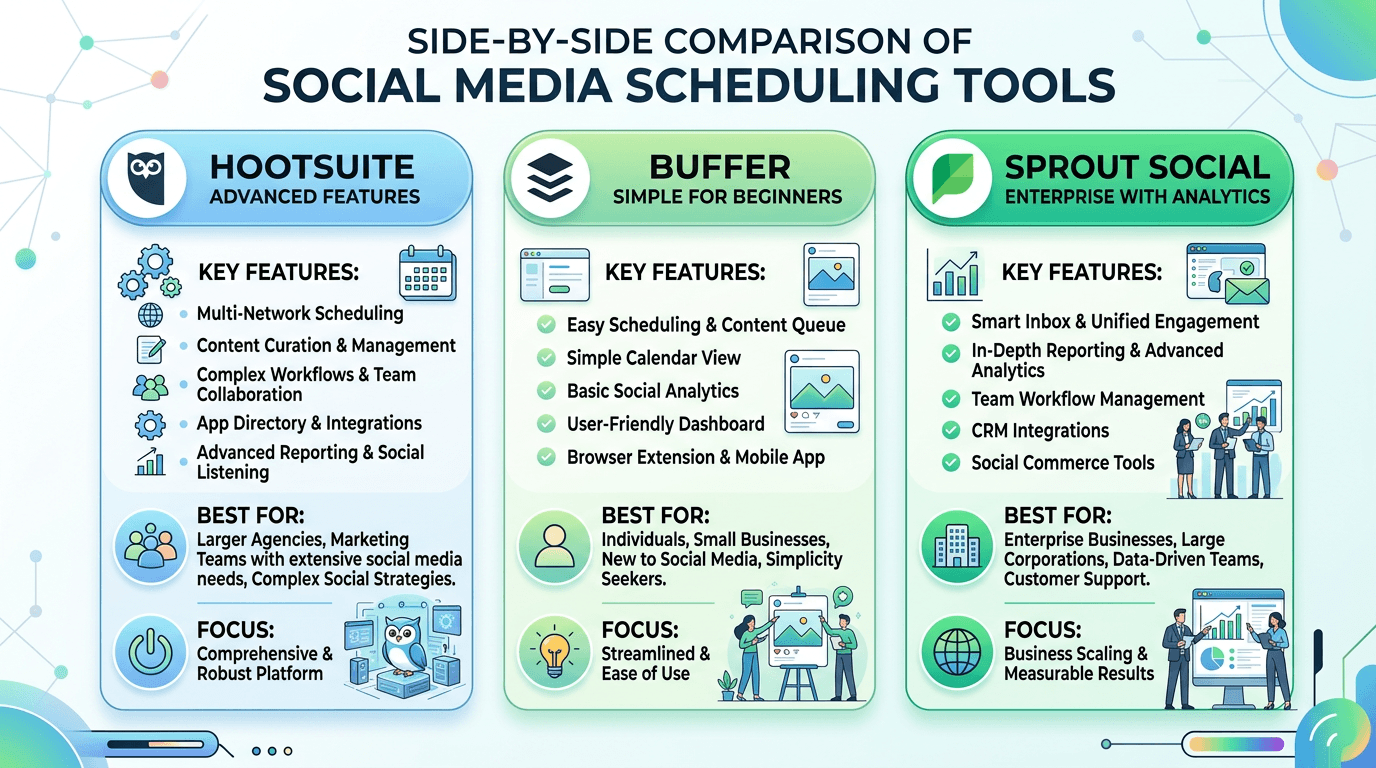
Hootsuite / Buffer
Schedule posts in advance for multiple platforms. Plan a full week of content in two hours. Both offer free plans for up to three social accounts — ideal for small businesses getting started.
Canva
The best design tool for non-designers. Templates for every social media size. The free version is very capable. Canva Pro (~$120/year) adds background remover, brand kits, and premium templates.
Google Analytics
Essential for tracking website traffic and conversions from social media. Connect UTM parameters to your social links to see exactly which posts and campaigns drive the most visits and sales.
Meta Business Suite
Manage both Facebook and Instagram from one dashboard. Schedule posts, respond to messages, view analytics, and run ads — all in one place. Essential if you use either Meta platform.
ManyChat / Zapier
Automation tools reduce manual work by 50%. ManyChat handles Facebook Messenger automation. Zapier connects apps so every new blog post automatically shares to your social accounts.
Social Media Algorithms — Simplified
The algorithm decides which posts people see. Understanding this gives you some control back. All major platforms share these priorities:
Engagement Rate is King
Higher engagement rate = more reach. Focus on content that people want to comment on, save, and share — not just like.
First Hour is Critical
Algorithms test content with a small audience first. Heavy engagement in the first hour signals quality and triggers exponential reach expansion.
Video Watch Time Boosts Reach
A 15-second video with 80% completion will outperform a 60-second video with 20% completion. Keep videos short and engaging.
Consistent Posting Wins
Accounts that post consistently get higher base reach. Consistency signals to the platform that you are a reliable content source.
Relevance Determines Reach
Algorithms track what each user engages with and show them more of that. Generic content gets no audience. Niche-specific content finds its people.
Social Media Metrics and KPIs
| Metric | What It Measures | Good Benchmark |
|---|---|---|
| Engagement Rate | (Total engagements ÷ Reach) × 100 | Instagram: 3–6% | Facebook: 1–2% | TikTok: 5–10% |
| Click-Through Rate (CTR) | (Clicks ÷ Impressions) × 100 | 1–3% on most platforms |
| Conversion Rate | Actions taken ÷ Visitors | 2–5% from social traffic |
| ROI | (Revenue − Cost) ÷ Cost × 100 | Positive = revenue exceeds spend |
| Follower Growth Rate | (New followers ÷ Total followers) × 100 | 5–10% monthly is healthy |
💡 Metric Tip: Do not track everything at once. Pick two or three KPIs that align directly with your SMART Goals. If your goal is website traffic, track CTR and sessions from social. If your goal is brand awareness, track reach and follower growth rate.
Common Mistakes to Avoid
Real-Life Examples and Case Studies
0 to 10K Followers in 6 Months Using Reels
A local coffee shop had 500 Instagram followers posting one photo per day. They shifted to three Reels per week showing latte art tutorials, behind-the-scenes roasting, and customer spotlights — and engaged with local food bloggers.
3x Sales Increase Using Instagram Retargeting Ads
A mid-sized home decor brand ran Instagram Shopping ads targeting people who had visited their website in the last 30 days but had not purchased — showing them the exact products they had viewed.
150 Qualified Leads From LinkedIn Organic Content
A SaaS company posted educational LinkedIn carousels explaining product use cases, with a "link in comments" to a detailed case study. Zero paid budget.
2 Million Reel Views With $0 Promotion
A small bakery posted a 15-second Reel showing how they pipe flowers onto cupcakes. No music, no voiceover — just the visual process.
Future Trends in Social Media Marketing (2026)
AI Content Generation
AI tools generate captions, suggest hashtags, repurpose long videos into short clips, and create images from text. They handle repetitive tasks so you can focus on strategy and storytelling.
Short-Form Video Dominance
Reels, Shorts, and TikTok are now the primary way users discover new brands. If you are not creating video content in 2026, you are missing the biggest opportunity in social media.
Social Commerce Growth
Buy products directly inside social apps without leaving. Instagram Shops, Facebook Shops, and TikTok Shops are becoming standard. By 2026, social commerce is expected to account for 15% of all e-commerce sales.
Personalization at Scale
AI algorithms are getting better at showing each user exactly what they want. Generic content loses reach. Personalized content for specific segments sees 30–50% higher engagement rates.
Micro-Influencer Economy
Nano influencers (1K–10K followers) are becoming more valuable than celebrities due to higher engagement rates and lower costs. Influencer marketing is now a standard marketing budget line item.
Start Your Social Media Strategy Today — Checklist
Glossary of Social Media Marketing Terms
| Term | Simple Meaning |
|---|---|
| Engagement | Likes, comments, shares, and saves on your content |
| Reach | Number of unique people who see your content |
| Impressions | Total views including multiple views by the same person |
| Conversion | A desired action taken — purchase, sign-up, or download |
| Organic | Free content you post without paying the platform to show it |
| Paid | Content you pay the platform to show to specific audiences |
| Algorithm | The platform's system for deciding which posts users see |
| CTR | Click-Through Rate — percentage of viewers who click your link |
| ROI | Return on Investment — revenue compared to what you spent |
| UGC | User-Generated Content — posts your customers create about you |
| ROAS | Return on Ad Spend — revenue generated per dollar spent on ads |
| UTM | Tracking tags added to links to measure specific campaign performance |
Frequently Asked Questions
Organic posting is free. You can create a business account on any platform and start posting without spending money. However, organic reach is limited to 2–10% of your followers. Most businesses eventually invest in paid ads, design tools, or scheduling tools. You can start with zero budget, but expect slower growth than a paid strategy.
Organic results typically take 3 to 6 months of consistent posting before you see meaningful traffic or sales. Paid advertising shows results within 24 to 48 hours. Organic builds a lasting long-term asset. Paid delivers immediate but temporary results. The most effective strategy uses both.
For B2B companies selling to other businesses, LinkedIn is best because users are in a professional mindset. For B2C companies selling directly to consumers, Instagram is often best because it is visual and lifestyle-focused. Local businesses should consider Facebook for community building. Youth-focused brands should prioritize TikTok.
A minimum of 3 posts per week is recommended for most platforms. 5 posts per week is ideal for consistent reach growth. The most important factor is consistency — an account posting 3 times per week every week will outperform one posting 10 times one week and nothing the next. Set a schedule you can maintain sustainably, not just for a few weeks.
Short-form video consistently gets the highest organic reach on every major platform in 2026 — including Instagram Reels, TikTok, and YouTube Shorts. Videos of 15–60 seconds tend to perform best because completion rates are higher. Static images still work well for product showcases and aesthetic content, but video is the dominant format for reach.
Benchmarks vary by platform. On Instagram, 3–6% is considered good. On Facebook, 1–2% is solid given its larger audience. On TikTok, 5–10% is common because the algorithm distributes content widely. Calculate engagement rate as (total engagements divided by reach) multiplied by 100. Track your own rate over time — improvement matters more than hitting any single benchmark.
Get a Comprehensive Social Media Audit from Webperts
You have learned the complete framework for Social Media Marketing. But knowing and doing are two different things. The Webperts team audits your current social media presence, identifies exactly what is holding you back, and gives you a clear, actionable roadmap — built on real-world data, not theoretical advice.
Submit Your Site for a Free Audit →Learn more about Webperts Social Media & Digital Marketing services